Last week, when I was in Paris, I visited the Musée de la Libération de Paris to see their exhibit on war photographer Robert Capa. I had assumed that the exhibit would be gallery-style, with Capa’s prints hanging on bare walls. Instead, Capa’s works are interspersed with information about his life and the wars that he covered, along with artefacts from his life. This includes several of his contact sheets, as well as copies of magazines that published his work. I loved getting a peek at his creative process as well as how editorial choices positioned his photos.
(Capa was a leftist, and his employers didn’t always use the photos in a consistent manner with his intentions).
Capa was born Endre Ernö Friedmann in Hungary. He fled persecution of Jewish people by moving to…. Germany. Which is how he ended up living in Paris (and, later, America). According to the exhibit, he spoke six languages, but his friends always said “none of them well.” His partner, Gerta Pohorylle, suggested that they work under the alias of Robert Capa. They wanted to charge an American-sized premium for their work.
(You gotta respect the hustle).
Gerta eventually took an alias of her own, Gerda Taro. Tragically, she was killed during the Spanish Civil war. Capa was devastated by her death, but the work had to go on. He ended up travelling around with Ernest Hemingway and took some of the most iconic photos of the war.
While double-checking my information on Wikipedia (this might just be a blog, but I have standards), I discovered that a suitcase with 4500 of Capa, Taro and David Seymour’s photos turned up in a suitcase in Mexico in 2007. There’s a documentary about it (La Maleta Mexicana) and I am now determined to find a way to watch it.
(I’ll report back).
(Maybe).
Most of the exhibit focused on Capa’s photos of WWII. I mean, it is a museum about the liberation of Paris, after all. Capa took 11 photos of D-Day, dubbed “The Magnificent Eleven.” There’s a story about there having been 95 other photos that were destroyed in a darkroom accident. According to the video that I watched as part of the exhibit, that’s probably not true. But, honestly, taking 11 somewhat blurry photos on Omaha Beach while being actively shot at is an accomplishment all on its own.
I think my favorite part of the exhibit was a video where they used archival footage to track Capa’s movements during the liberation of Paris. You can see him photograph the last bit of fighting, accompany Charles de Gaulle, and even help out with some translation as they negotiated the surrender of the Mairie. That guy was made of sterner stuff than me… I would have run for the hills during the fighting, but he just kept taking pictures.
(They didn’t do anything to identify/protect the press back then).
It was also pretty cool to see the comparison between the head-on newsreel footage and the photos that Capa can be seen taking. It’s the difference between aiming a camera in the direction of the action and art. Capa’s photos are beautifully framed and composed. He was also incredibly spare with his snaps (he had a limited amount of film, after all). Several times in the film, you see him position his camera to take a photo… but his contact sheets show that he never actually clicked the shutter.
As someone who sometimes takes 3-4 pictures of a particularly nice looking meal to send to her husband, it was humbling.
One adorable moment, is when they figure out that Capa and two other photogs from Life Magazine all took pictures of each other at the same time during the celebrations. Very “Spiderman pointing at Spiderman” vibes. They all looked so pleased with themselves.
Capa went on to take photographs in the USSR and Israel and to found the Magnum photo agency with Henri Cartier-Bresson.
Oh and he found time to hang out on a film set with Truman Capote and John Huston in Italy. And have an affair with Ingrid Bergman. As one does.
Capa was killed in Vietnam in 1954, when he stepped on a landmine.
War is hell.
Speaking of war being hell, I took a tour of the museum’s permanent collection.
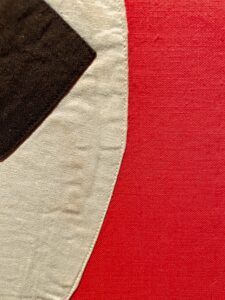
The tour relies a little too much on having you read a series of dense texts, but it does a really good job of humanizing the war. One of the exhibited items is a nazi flag. I found myself moved to see it so close up. I was struck by the fact that the shapes aren’t perfect. It drove home two thoughts: fascism is created by actual people (like whoever sewed the flag). But, more importantly, it’s not infallible.
The permanent collection follows the lives of Général Leclerc and Jean Moulin (they each have their own museum under the Liberation Museum’s umbrella). I was struck by the fact that two men who were polar opposites both decided that France shouldn’t be run by Nazi Germany. Leclerc was a member of the nobility and a right-winger. Moulin was a public servant and a radical.
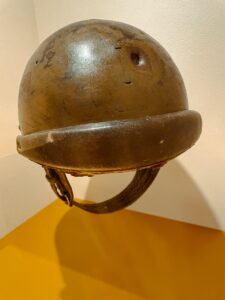
The collection also features helmets (and other items) worn by soldiers when they were killed in action. I got a visceral reaction to seeing the holes, dents, and marks left by bullets. Especially accompanied by the portraits and back-stories of the men.
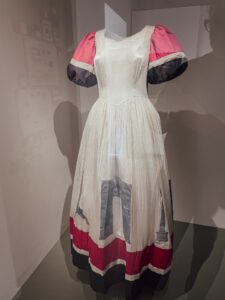
There are also moments of joy. There’s an entire section dedicated to celebratory bouquets, buttons, rosettes, etc. As a confirmed sewing nerd, I loved this dress that was created by Marguerite Sabaut to celebrate the liberation. Robert Capa would never, but I took several photos of it. It’s sewn up in the tri-color of the French flag (bleu, blanc, et rouge) and is decorated with famous French monuments.
(At long last, a dress with the Eiffel Tower on it that isn’t completely tacky).
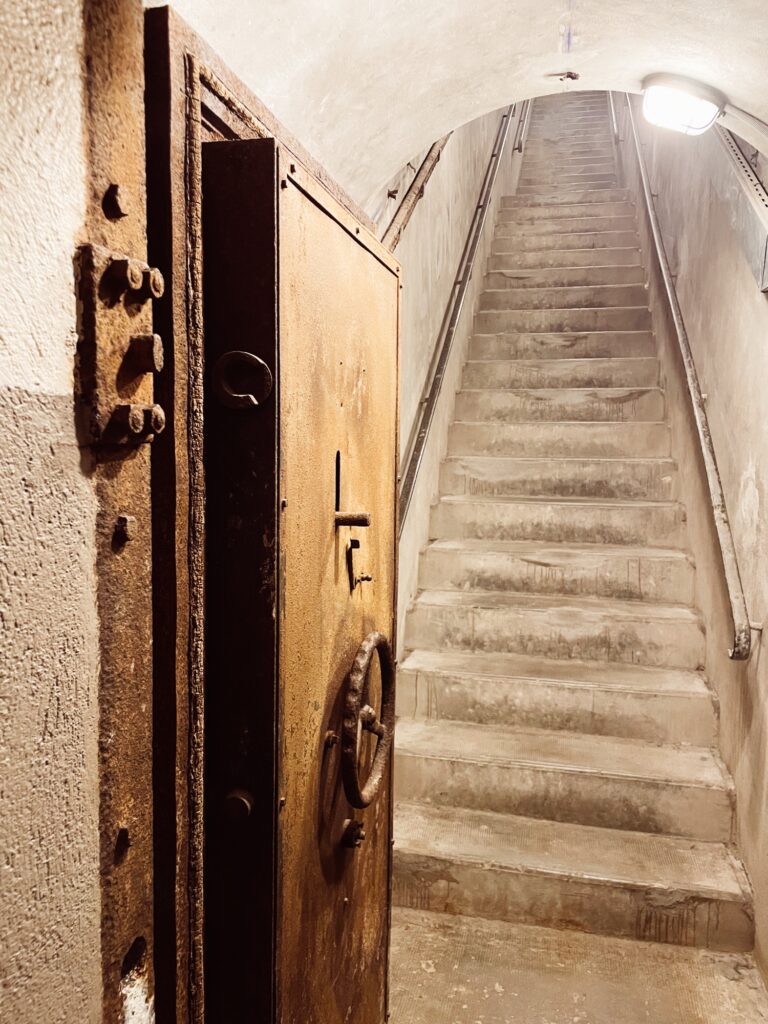
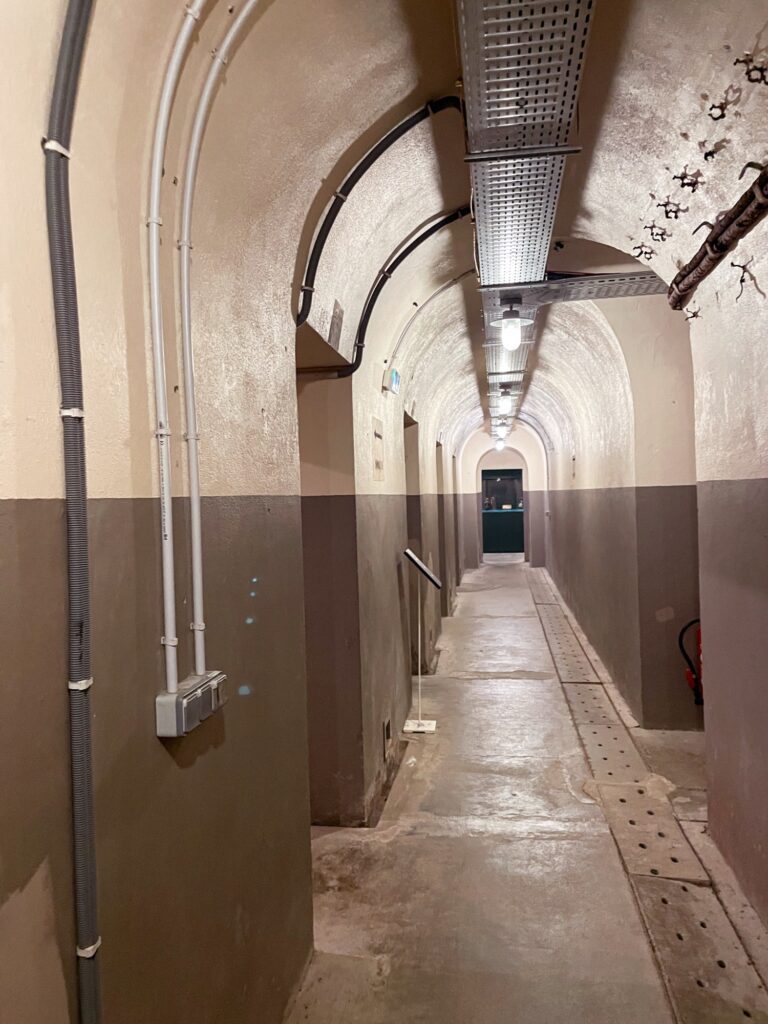
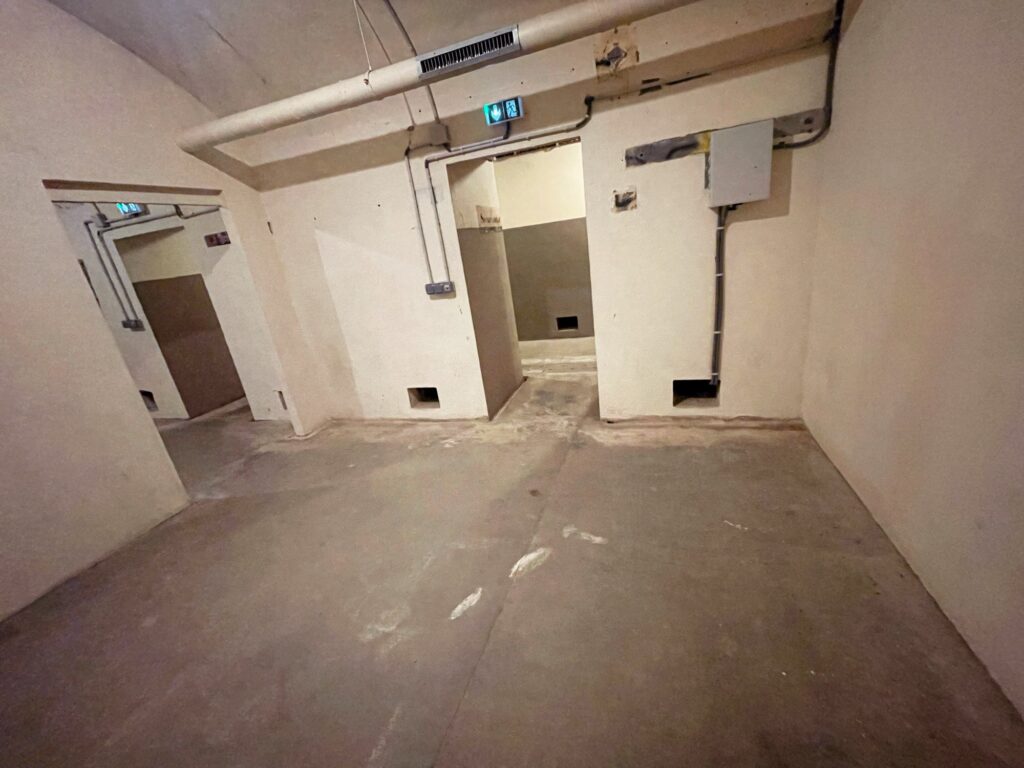
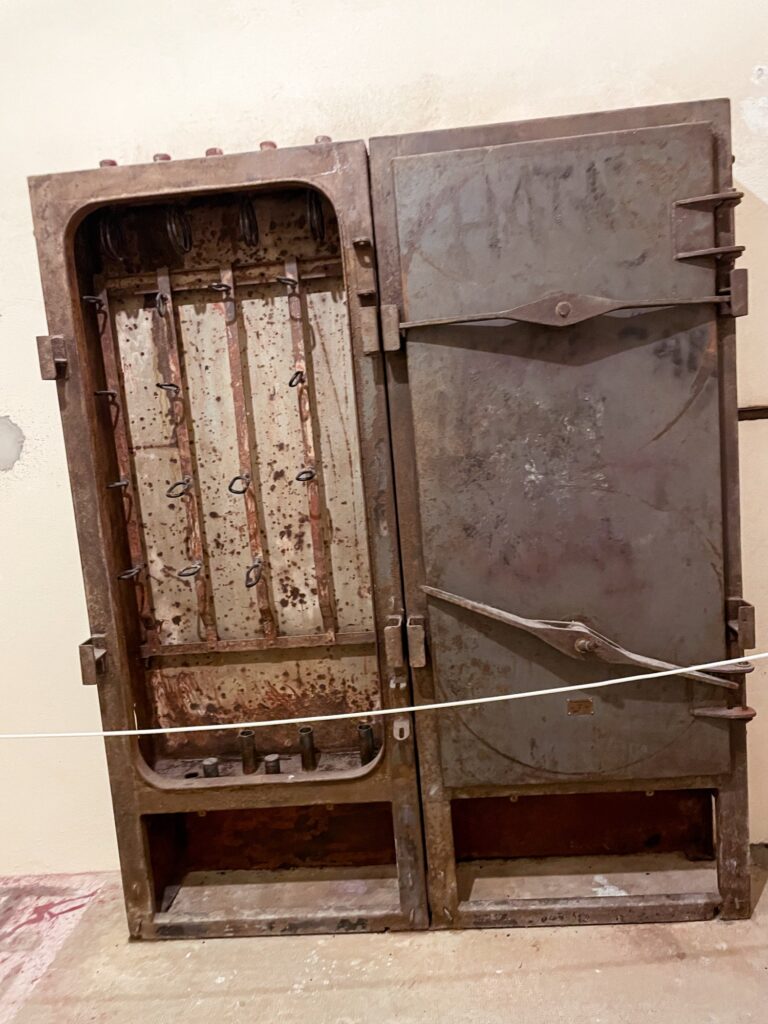
At the end of my visit, I managed to snag a ticket to the Rol-Tanguy command post, located under the museum. You can only get tickets in person, and they’re pretty limited, so I felt super lucky to get a spot for the last tour of the day.
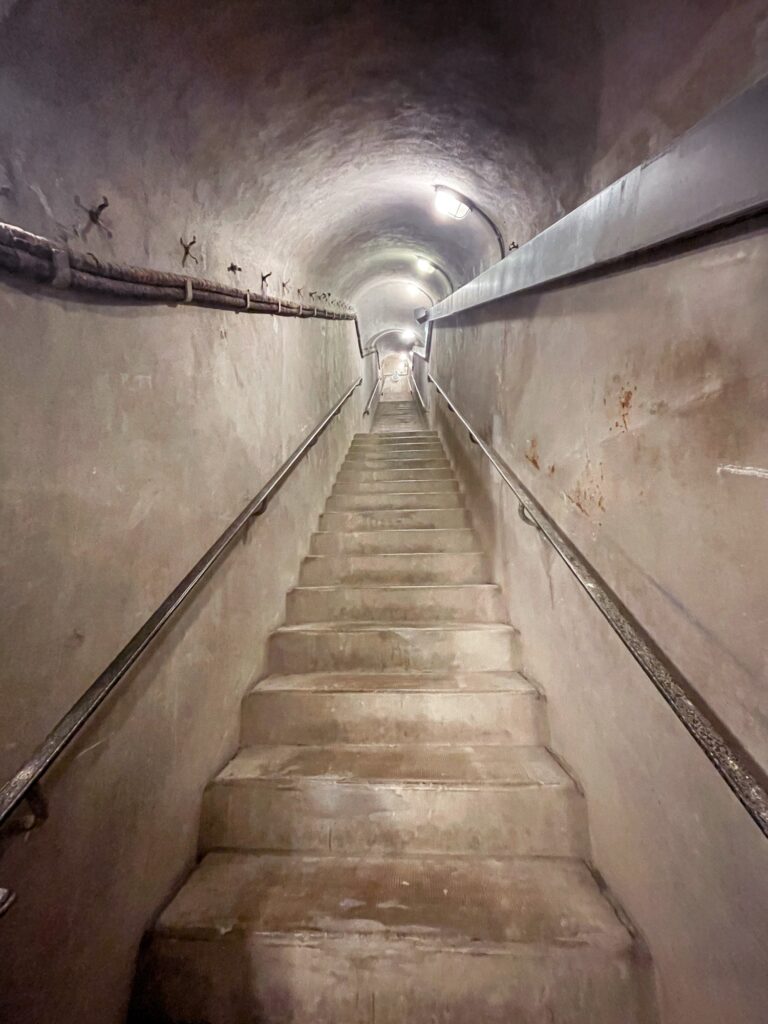
They do warn you that “what goes down must come up,” and they’re not kidding. It’s about 200 meters/100 steps underground (at around the same level as the Parisian catacombs). According to my watch, I climbed the equivalent of about 6 flights of stairs on my way back up.
It was worth it, though!
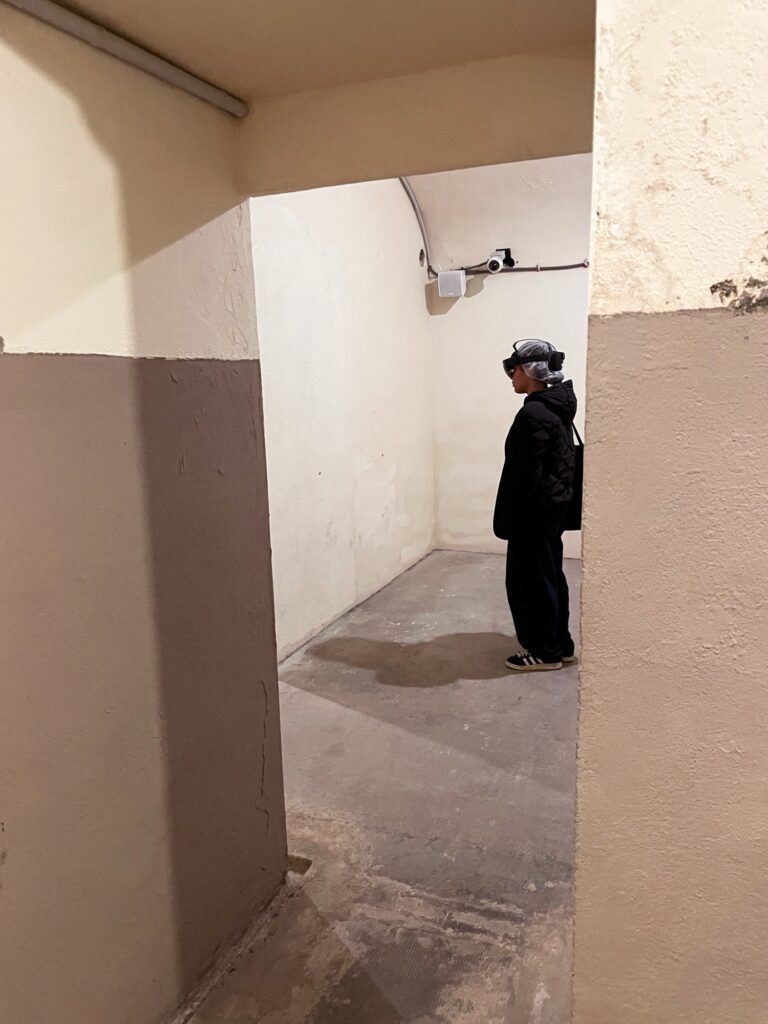
If you can’t tell, I’m a bit of a history nerd. I loved the chance to literally walk in the footsteps of the French Resistance. My tour featured augmented-reality headsets. It was pretty cheesy, but it was fun to pretend that I was in the command post when it was in action. Unfortunately, the English language AR version is on the longer side, so I didn’t get to explore using my human eyes. I’m glad I cheated and peeked a few times when I was walking around with the headset on.
The stairs back up weren’t even all that bad.
Ok, they weren’t all that bad.